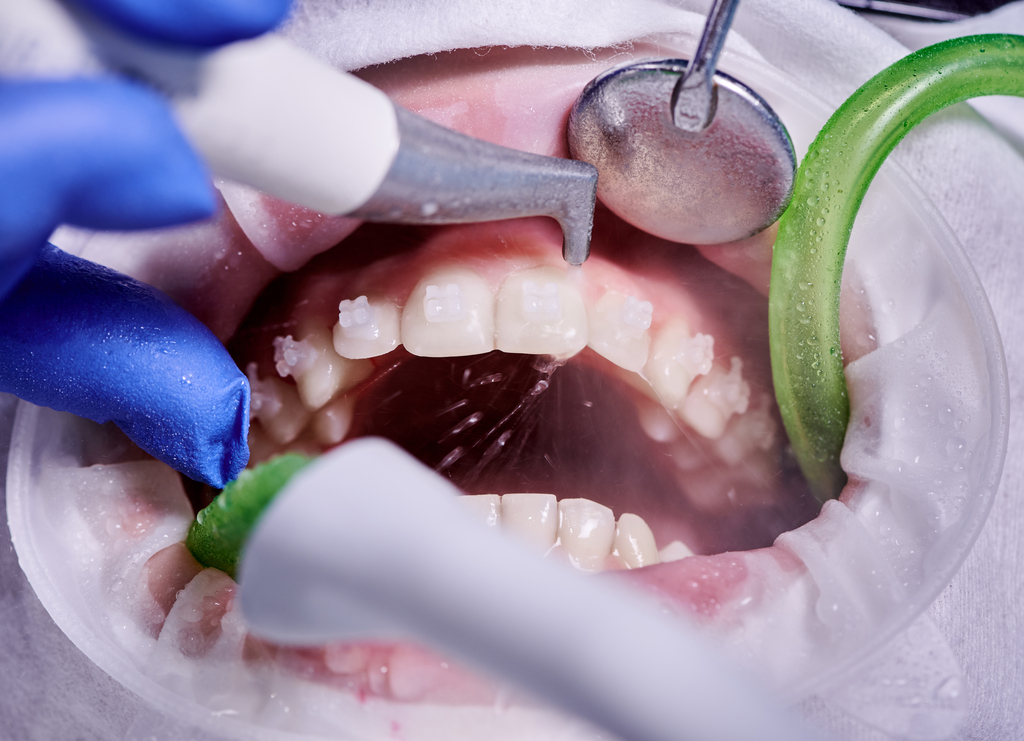
What does prophylaxis treatment involve?
Prophylaxis can either be performed in the course of a regular dental visit or, if necessary, under general anesthetic. The latter is particularly common where severe periodontal disease is suspected or has been diagnosed by the dentist. An endotracheal tube is sometimes placed in the throat to protect the lungs from harmful bacteria which will be removed from the mouth.
Prophylaxis is generally performed in several stages:
- Supragingival cleaning – The dentist will thoroughly clean the area above the gum line with scaling tools to rid them of plaque and calculus.
- Subgingival cleaning – This is the most important step for patients with periodontal disease because the dentist is able to remove calculus from the gum pockets and beneath the gum line.
- Root planing – This is the smoothing of the tooth root by the dentist to eliminate any remaining bacteria. These bacteria are extremely dangerous to periodontitis sufferers, so eliminating them is one of the top priorities of the dentist.
- Medication – Following scaling and root planing, an antibiotic or antimicrobial cream is often placed in the gum pockets. These creams promote fast and healthy healing in the pockets and help ease discomfort.
- X-ray and examination – Routine X-rays can be extremely revealing when it comes to periodontal disease. X-rays show the extent of bone and gum recession, and also aid the dentist in identifying areas which may need future attention.
Prophylaxis is recommended twice annually as a preventative measure, but should be performed every 3-4 months on periodontitis sufferers. Though gum disease cannot be completely reversed, prophylaxis is one of the tools the dentist can use to effectively halt its destructive progress.
If you have questions or concerns about prophylaxis or periodontal disease, please ask your dentist.