
If you are looking for a dentist in Rochester, MN because you need a root canal and crown, you may wonder whether both can be completed during one appointment. In some cases, they can. The decision depends on whether the root canal can be finished, whether the tooth is ready for a permanent restoration, and whether enough appointment time is available.
Kelly Dentistry performs root canal treatment in-house and offers same-day CEREC crowns. Your evaluation helps determine how those services fit into your treatment plan.
Here is what to know about combining treatment, why separate visits may be appropriate, and how to protect your tooth along the way.
Why a Root Canal and Crown Have Different Jobs
A root canal treats inflamed or infected tissue inside a tooth. The dentist removes the affected tissue, cleans and fills the canals, and seals them. Kelly Dentistry provides root canal therapy with an emphasis on comfort, clear explanations, and same-visit treatment when possible.
The final restoration serves a different purpose. It seals the opening used for treatment and restores the tooth’s shape and function. Depending on the tooth, that restoration may be a crown or filling.
A crown covers the prepared tooth. It may be recommended when decay, a crack, an injury, or a large existing filling has left too little structure for a filling alone. Back teeth often need coverage because they bear substantial chewing forces.
The recommendation depends on the tooth’s location, remaining structure, and bite. A crown is not automatically required for every tooth that receives a root canal.
What “Same-Day Crown” Actually Means
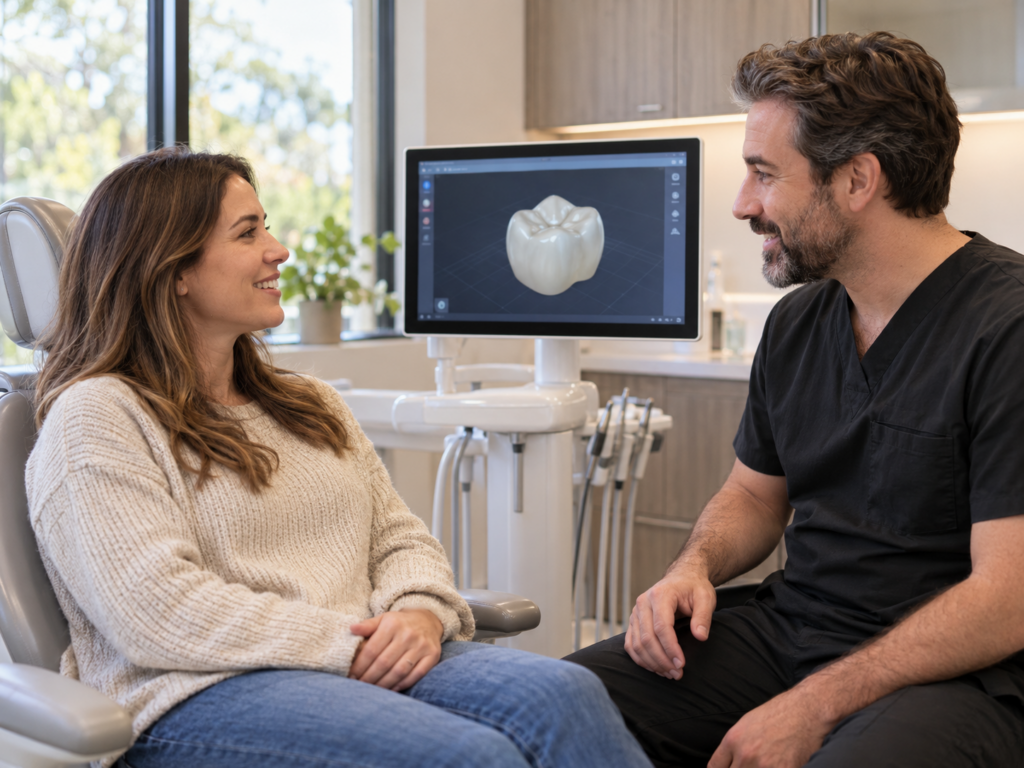
A same-day crown is designed, made, and placed during one crown appointment. Kelly Dentistry uses digital scanning and in-office milling to provide same-day dental crowns.
This describes how the crown is made. It does not guarantee that all treatment leading up to it will happen that day.
There are two possible schedules:
- Combined treatment: The root canal is completed, any necessary foundation is built, and the permanent crown is made and placed during the same appointment.
- Separate treatment visits: The root canal is completed first. You return for a crown that is made and placed during that later appointment.
A root canal that takes several visits does not prevent you from receiving a same-day crown once the tooth is ready.
What Determines Whether Both Can Be Completed Together?
Your dentist considers the whole treatment plan before recommending a combined visit. Having crown-making technology is one part of that assessment.
The Root Canal Can Be Completed
The canals need to be treated, filled, and sealed before the final restoration is placed.
Some teeth have complex canal anatomy or need additional treatment. Ongoing drainage, retreatment, or another concern may require a temporary restoration and a later appointment.
Your dentist will also assess symptoms. Mild tenderness after treatment can occur, but worsening pain or swelling needs attention. There is no single symptom checklist that replaces a professional evaluation.
The Tooth Can Support the Restoration
The dentist needs to understand how much healthy tooth remains and whether a crown can be supported.
Damage below the gumline, a deep crack, or concerns about the root and surrounding tissues may change the plan. Additional imaging or a specialist evaluation may be needed before deciding how to restore the tooth.
Making a crown quickly does not resolve an uncertain foundation. Those concerns need to be addressed before the final restoration is placed.
Any Necessary Buildup Can Be Finished
If part of the tooth is missing, the dentist may place a core buildup to replace that structure and create a foundation for the crown.
Some teeth also need a post to help retain the buildup. A post is not required after every root canal, and its main purpose is to hold the buildup in place.
Whether these steps can be completed during the same appointment depends on the condition of the tooth and the planned restoration.
The Tooth Can Be Scanned and the Crown Placed Properly
A digital scan needs to capture the prepared tooth clearly. Bleeding, swelling, or a difficult-to-reach edge below the gumline may interfere with scanning or crown placement.
The dentist also checks the bite, neighboring teeth, and available space. Clenching or grinding may influence the crown design and recommendations for protecting the restoration.
These details matter even when the crown is made in the office.
Enough Time Is Reserved
Root canal treatment and crown fabrication involve several separate steps. A combined visit needs enough time for treatment, preparation, scanning, milling, and fit checks.
Tell the office what you hope to accomplish when scheduling. The team can explain whether an evaluation is needed first and how much time to reserve. A routine crown appointment should not be assumed to include a root canal.
What Happens During a Combined Appointment?
If your dentist recommends completing both procedures together, the visit may follow this general sequence:
- Review and anesthesia: The dentist confirms the plan, reviews the tooth, and numbs the treatment area.
- Root canal treatment: The affected tissue is removed, and the canals are cleaned, filled, and sealed.
- Foundation and crown preparation: A buildup is completed if needed, and the tooth is shaped for its restoration.
- Digital design and milling: The prepared tooth and bite are scanned, and the crown is made in the office.
- Fit and placement: The dentist checks the crown’s fit, contacts, and bite before securing it.
Treatment needs can change during an appointment. If an unexpected concern appears, the dentist may recommend a temporary restoration and explain the next step.
Why Separate Visits May Be Recommended
Separate appointments can provide time for additional treatment, reassessment, or coordination with another provider. They may also be needed because a longer appointment is unavailable or difficult for the patient to manage comfortably.
Kelly Dentistry provides care within a general dental setting and works with local specialists when appropriate. If an endodontist handles your root canal, your dentist can coordinate the final restoration afterward.
A delay does not automatically mean treatment failed. However, the permanent restoration should be completed according to your dentist’s timeline. Do not assume that a temporary filling or crown can stay in place indefinitely simply because the tooth feels better.
Caring for Your Tooth Between Visits
Your dentist will provide instructions based on the treatment completed and the restoration protecting your tooth.
General precautions include:
- Wait until numbness wears off before eating.
- Avoid heavy biting and hard or sticky foods on the treated tooth until your dentist clears you.
- Brush and floss carefully around the area.
- Take medications only as directed.
- Keep the appointment for your permanent restoration.
Contact the office promptly if your temporary restoration comes out, your bite feels uneven, or pain or swelling worsens. If swelling makes breathing or swallowing difficult, seek emergency medical care immediately.
Once the permanent crown is placed, continue daily brushing, cleaning between teeth, and regular dental visits. Let your dentist know if the bite feels uncomfortable rather than trying to adjust to it.
Frequently Asked Questions
Does Every Root Canal Need a Crown?
No. The final restoration depends on the tooth’s location, remaining structure, and biting forces. Many back teeth need coverage, while some front teeth with enough healthy structure may be restored with a filling. Your dentist will explain the recommendation for your tooth.
Is a Same-Day Crown a Temporary Crown?
No. A same-day CEREC crown is intended to be the permanent restoration. It is made in the office rather than sent to a laboratory. It still requires careful preparation, fit checks, bite assessment, and ongoing care.
Does the Tooth Need to Be Completely Pain-Free Before a Crown?
There is no universal rule based on pain alone. Mild tenderness may be expected after treatment, while severe, worsening, or returning symptoms need assessment. Your dentist considers the symptoms along with treatment completion and the tooth’s condition before recommending crown placement.
What Should I Do If My Temporary Filling Comes Out?
Contact your dentist promptly, even if the tooth does not hurt. The tooth may need to be checked and resealed. Avoid chewing on it until you receive instructions, and keep the planned appointment for the permanent restoration.
Planning Treatment With a Dentist in Rochester, MN
When you need a dentist in Rochester, MN for root canal treatment and a crown, understanding the sequence can make planning easier.
Kelly Dentistry’s patient-centered approach encourages you to participate in treatment decisions. Share any concerns about longer appointments, comfort, work commitments, or coordinating care with another provider.
Ask whether the root canal is expected to be completed in one visit, whether a buildup is needed, and when the tooth can receive its final restoration.
Both procedures may be completed together when the tooth and appointment plan allow. If separate visits are recommended, the team can explain how to protect the tooth and what each visit will involve.
Contact Kelly Dentistry to schedule an evaluation and discuss a treatment timeline suited to your needs.