
If your next dental visit is labeled “periodontal maintenance,” the biggest change is what your dental team is following up on. A regular cleaning helps keep teeth and gums healthy. Periodontal maintenance is ongoing care after treatment for periodontitis, a form of gum disease that damages the tissues and bone that hold teeth in place.
Both visits remove plaque and tartar. During maintenance, your dental team also checks how the areas previously affected by gum disease are doing and whether any need more attention. That history matters even when your gums feel better.
| What changes | Regular dental cleaning | Periodontal maintenance |
| Why you’re there | Preventive care based on your current oral health. | Ongoing care after active treatment for periodontitis. |
| What the team checks | The health of your teeth and gums, including any new concerns. | How gum pocket measurements, bleeding, and other findings compare with earlier visits. |
| Where the team cleans | Tooth surfaces and around the gumline, including just below it where needed. | Tooth surfaces and, as needed, deeper areas around the roots where deposits collect. |
| How often you return | Depends on your oral health and risk factors. | May be more frequent, depending on how your gums respond after treatment. |
What Happens at a Regular Cleaning?
During routine dental exams and cleanings, the team checks for changes in your teeth and gums. A hygienist removes plaque and tartar that brushing and cleaning between your teeth leave behind. Tartar is plaque that has hardened onto a tooth, so a toothbrush won’t take it off. The hygienist may also polish your teeth and show you how to reach spots you tend to miss.
Some people have mild irritation in a few places and can still receive routine care. More widespread inflammation may call for a different type of cleaning after an exam. Bleeding with brushing or flossing is worth mentioning, but by itself it doesn’t tell you whether you have periodontitis or what kind of visit you need.
Where Does a Deep Cleaning Fit?
If your exam shows periodontitis, your dentist may recommend periodontal scaling and root planing, often called a deep cleaning. This is active treatment. It removes plaque and tartar from affected areas below the gumline, including deposits on the roots that are difficult to reach at home.
After the tissues have had time to heal, the team can check how they responded. If certain areas still show signs of active disease, they may need more treatment. Once the team moves to ongoing care, periodontal maintenance helps monitor changes and manage new buildup. You won’t necessarily need another full deep cleaning at every maintenance visit. The team focuses on the places that need attention based on the exam.
What Does the Dental Team Look for at a Maintenance Visit?
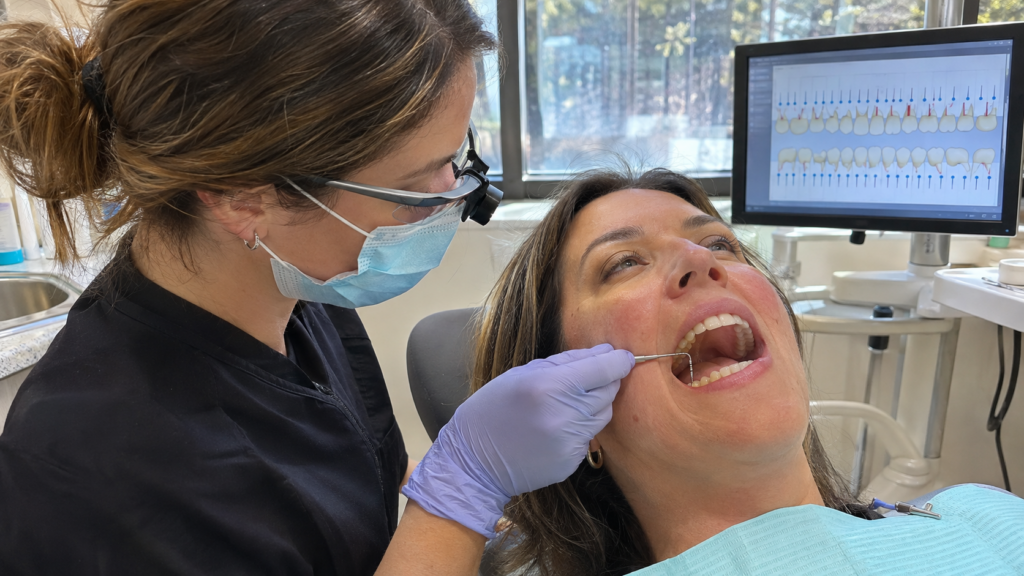
Your hygienist may use a small measuring tool to check the spaces between your teeth and gums. These spaces are called gum pockets. The team can compare the measurements with earlier visits and note where the gums bleed, have pulled back, or are harder to clean. If X-rays are needed, they can help the dentist assess the bone that supports your teeth.
For example, if a pocket behind a molar is getting easier to clean and no longer bleeds when checked, the team may continue watching it at future visits. If it is getting deeper or starts bleeding again, the dentist may look more closely and discuss whether that spot needs further care. A single measurement helps tell part of the story; the team considers it alongside your past measurements, other findings, and treatment history.
You can also use the visit to get help with home care. If floss is hard to maneuver near a back tooth, ask whether a small brush designed to fit between teeth would work better in that space. Ask the hygienist to show you how to use the right size without forcing it.
Before you leave, ask the team to show you one or two places to focus on at home. It may help to ask them to point to the teeth on your chart or show you the area in a mirror. That gives you something specific to work on between visits. At your next appointment, tell the team what was easy to keep up with and where you still had trouble, so they can help you adjust your routine.
How Often Will You Need Periodontal Maintenance?
A patient receiving routine preventive care might come in about every six months. After gum disease treatment, a dentist may recommend maintenance about every three to four months. Those are examples. Your schedule depends on how your gums have responded, whether pockets are still deep or bleeding, how easily you can keep the area clean, and other risk factors such as tobacco use or diabetes.
If an earlier appointment is recommended, ask what the team wants to recheck at that visit. A patient who is healing well may have different follow-up needs from someone with persistent inflammation. If cost or scheduling makes it hard to keep the recommended visits, tell the office so you can discuss your options and understand what the team wants to monitor.
Can You Go Back to Regular Cleanings When Your Gums Feel Better?
If you’ve been treated for periodontitis, gums that feel better are an encouraging sign. The history of gum disease still matters because it can become active again, sometimes without pain or other obvious changes you’d notice at home. Continued monitoring helps the team see how stable your gums are and whether any areas need attention before you notice a problem.
The team may change how often you come in as your exam findings change. It’s reasonable to ask, “Which areas are we watching, and what would make you recommend changing my schedule?” At Kelly Dentistry, you can ask to review your measurements and talk through the recommendation before arranging your next visit.
The visit may feel familiar: you may see the same hygienist, sit in the same chair, and leave with your teeth feeling clean. The difference is what the team does with the information it collects. If your measurements are stable, that helps the team judge how your plan is working. If a spot has changed, they can explain whether they want to check it again sooner or assess it for further treatment. That comparison over time is one of the main reasons to keep your maintenance visits even when nothing hurts.
FAQs
Will a maintenance visit feel different?
Much of it may feel familiar, though the hygienist may spend more time checking or cleaning certain areas. If a tooth or part of your gumline is sensitive, tell the team before the cleaning so you can discuss ways to make the visit more comfortable.
What if I missed a maintenance visit?
Call to reschedule. If it has been a while or you’ve noticed bleeding, swelling, or a loose tooth, tell the office when you call. The team can decide whether it should recheck your gums before confirming what kind of appointment you need.
Do I still need dental exams during maintenance?
Yes. Maintenance focuses on the gums and the structures that support your teeth. You still need dental exams to check for issues such as cavities or problems with existing fillings and crowns. Ask the office when your next exam is due.
What if I had gum disease treatment at another office?
Tell your new dental team what treatment you had and when. If you can, ask your previous office to send your gum measurements, relevant X-rays, and treatment records. Those details can help the team compare your past and current findings and explain your options.
If your cleaning recommendation changed or you’re unsure which visit to book, request an appointment with Kelly Dentistry in Rochester, MN, or call (507) 280-7557. We’ll review your gum health and treatment history with you and explain what kind of visit makes sense and when to return.